

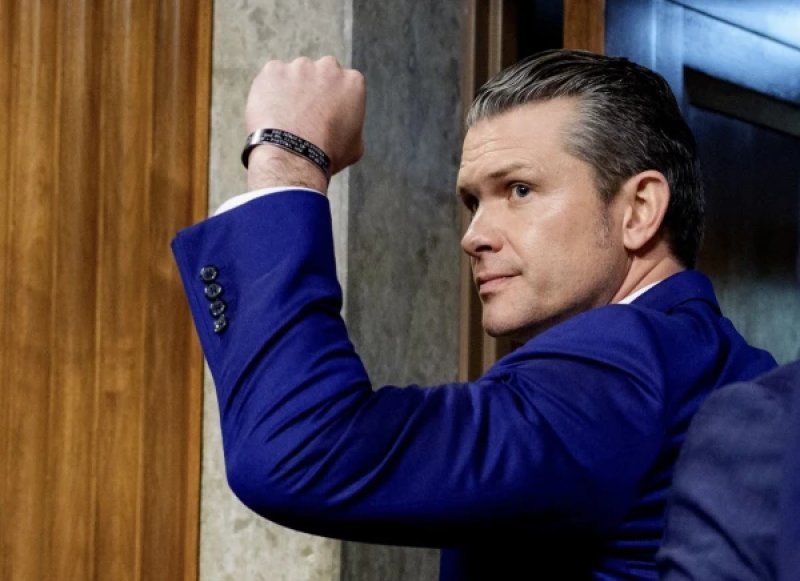
 Foto: BB.LV / Пит Хегсет
The United States and Venezuela have agreed to restore military cooperation less than a year after an American operation that resulted in the capture of President Nicolás Maduro. The new partnership was announced by U.S. Secretary of Defense Pete Hegset, who unexpectedly arrived in Caracas on Wednesday, November 18. According to the LETA agency citing AFP, the visit of the Pentagon chief marked the highest-level visit to Venezuela by an American official since the events of January 2026. Hegset met with the interim president of the country, Delcy Rodríguez, and announced joint actions against organizations involved in drug trafficking. ### **From confrontation to military agreement** During the meeting at the Miraflores Palace in Caracas, representatives of the two countries signed an agreement to restore military ties. According to Reuters, the document provides for joint training of military personnel, exchange of intelligence information, and development of other forms of military cooperation. Hegset emphasized that Washington intends to expand cooperation with Venezuelan authorities in the fight against drug trafficking and organized crime. Special attention is planned to be given to groups using Venezuelan territory to transport drugs to the U.S. and other countries in the region. In fact, this means a shift from years of military confrontation to cooperation in the field of security. ### **“We will find you and kill you”** Speaking to reporters, the Pentagon chief made a tough statement directed at drug cartels. > “We will hunt you down, we will find you, and we will kill you,” Hegset said, addressing members of organizations that the U.S. administration calls “narcoterrorist.” He also warned that criminal groups will no longer be able to use Venezuela freely to spread drugs and violence. > “You will no longer export your crime and destruction to America, Venezuela, or any other country in the region,” the secretary emphasized. At the same time, specific timelines and scales of future joint military operations were not publicly announced. ### **Delcy Rodríguez welcomed cooperation with the U.S.** Interim President of Venezuela Delcy Rodríguez positively assessed the restoration of relations between the armed forces of the two countries. She stated that she welcomes the resumption of technical and military contacts with Washington. Rodríguez has been leading Venezuela since January 2026. Prior to that, she served as vice president under Nicolás Maduro. Despite the sharp change in relations with the U.S., a significant part of the political team of the former president remains in power. The current agreement demonstrates how much the relations between Washington and Caracas have changed in recent months. ### **What happened to Maduro** On January 3, 2026, U.S. military forces conducted an operation in Caracas, during which they captured Venezuelan President Nicolás Maduro and his wife Cilia Flores. Both were taken to the U.S., where Maduro faces charges related to drug trafficking. The operation sparked international disputes over the respect for Venezuela's sovereignty and the legality of U.S. actions. After Maduro's removal, power passed to Delcy Rodríguez, who began to develop contacts with the administration of U.S. President Donald Trump. Since then, Washington and Caracas have gradually restored cooperation, including in the economic and energy sectors. Venezuela has some of the largest oil reserves in the world, which also makes developing relations with it important for the American administration. ### **After Caracas — a visit to Colombia** Venezuela was an unexpected stop for Hegset during his trip to South America. After negotiations with Delcy Rodríguez, the Pentagon chief headed to Colombia. There he intends to discuss cooperation in the fight against drug trafficking and armed criminal groups. According to Reuters, the visit also included plans to transfer a Lockheed Martin C-130 Hercules military transport aircraft to Colombia. Thus, Hegset's trip became part of a broader Washington policy to expand military interaction with Latin American countries. The most unexpected outcome was the agreement with Venezuela, which was recently viewed by the U.S. administration as one of its main regional adversaries.
