

 Foto: BB.LV / город Валка
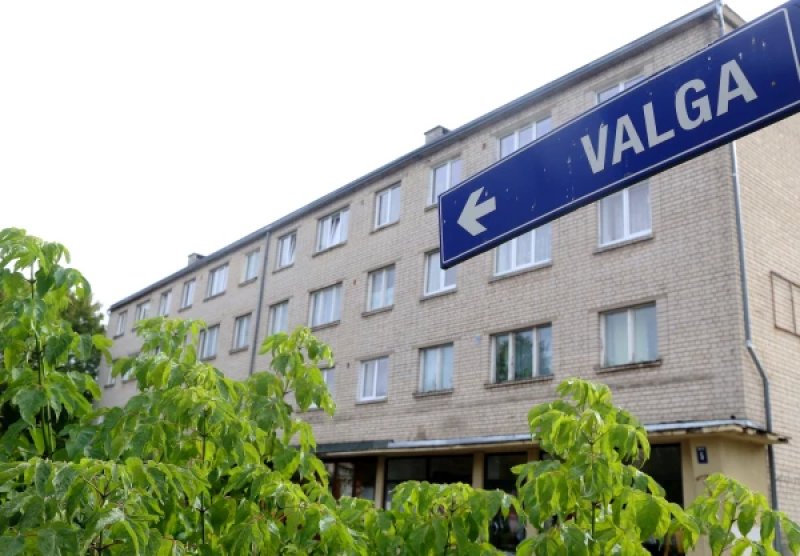
As a result, money goes to one municipality, while the expenses for roads, schools, and other services are borne by another. A particularly vivid example is Riga. Here, the property tax rate depends, among other things, on whether anyone is registered in the apartment. If there are no registered residents as of January 1, the tax for the entire year is calculated at a rate of 1.5% of the cadastral value. If there is at least one registered resident, reduced rates of 0.2% to 0.6% apply, provided other conditions are met. The difference can be quite substantial. Suppose the cadastral value of the apartment is 50,000 euros. If no one is registered in it, the tax for the year will be 750 euros. However, with one registered resident, it will be only 100 euros. The savings amount to 650 euros. It is not surprising that some owners of Riga apartments prefer to keep their registration in the capital, even if they actually live elsewhere. But an interesting situation arises here. A person uses the roads, public institutions, and other services of one municipality, while for the distribution of income tax, they are counted as a resident of another. Is this fair? The deprived municipalities certainly think not. In 2026, 78% of personal income tax revenues are directed to municipal budgets, while the remaining 22% goes to the state. Therefore, a registered resident is not just a line in statistics for local authorities, but a source of budget revenue. The consequences of such a system were discussed with Latvian Radio by the leaders of the Valmiera region. According to the chairman of the regional council, Janis Baiks, the population of the region decreased by 900 people over the year. When calculating funding, this means a loss of about one and a half million euros. At the same time, some residents who own property in Riga register there to avoid paying the higher tax for their capital apartment. This creates a paradox: officially, the number of residents in the region decreases, while the number of children in local schools increases. "So, do the children come to live in Valmiera by themselves?" Baiks jokes. According to him, if the authorities relied solely on population statistics, they would have to close two schools. In reality, however, the schools are overcrowded. And it’s not just about the number of students. If a child is registered in another municipality, there are mutual settlements between municipalities for their education. However, these only cover current expenses. Money for the repair of school buildings and major purchases has to be sought by the municipality where the child actually studies. An even more peculiar situation has developed in the Valka region, located on the border with Estonia. Here, residents often register their place of residence in the neighboring Valga, which is in another country. As explained by the executive director of the municipality, Valdis Shaicens, people are attracted by the accessibility of medical care and higher child benefits in Estonia. As a result, the Latvian municipality loses revenue, even though some of these people continue to live and use infrastructure in Latvia. This problem has existed for many years, and it is particularly acutely felt by small towns and rural municipalities. Their financial capabilities are already limited, and the loss of even a portion of taxpayers only exacerbates the situation. Representatives of the regions have long demanded changes to the system of fund distribution, but an agreement on reform has not yet been reached. The Ministry of Finance discussed the possibility of considering not only the place of a resident's registration but also their place of work, but it remains at the stage of discussions.
