

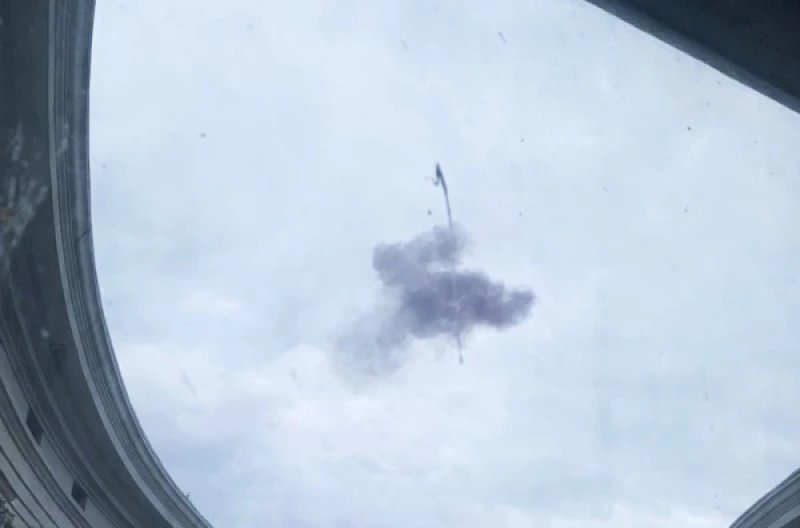
 Foto: BB.LV / Сбитый беспилотник над зданием МИД Украины
The Russian army struck Kyiv with ballistic missiles on the morning of November 20, damaging three bridges that connect the right and left banks of the Dnieper River. As a result of the attack, serious traffic restrictions have emerged in the Ukrainian capital, complicating travel for residents between the two parts of the city. According to the LETA agency citing the BBC, Kyiv Mayor Vitali Klitschko reported on the consequences of the shelling. He stated that the Podilsko-Voskresensky bridge crossing, the Darnytsky and Southern bridges were damaged. Additionally, another critical infrastructure facility was affected, the name of which city authorities have not yet disclosed. ### Where Traffic is Closed Traffic from the right bank of the Dnieper to the left has been closed on the Podilsko-Voskresensky bridge crossing following the missile attack. Restrictions also affected the Southern bridge, which had already been under a special traffic regime. Currently, traffic is only allowed from the left bank to the right. Vehicles weighing up to 10 tons, as well as public transport weighing up to 18 tons, are permitted to pass. The Darnytsky bridge has also been damaged. However, the extent of the damage to this crossing has not yet been determined. According to Klitschko, specialists will be able to conduct a full inspection of the structures after the air raid alert is lifted. Until the results of the technical inspection are received, it is impossible to assess how severely the structures have been affected and how long it will take to restore traffic. ### Residents Asked to Refrain from Using Cars Due to the complicated communication between the banks of the Dnieper, Kyiv authorities have appealed to residents to refrain from using personal vehicles if possible. Enterprises and institutions have been advised to temporarily organize remote work for employees, if the nature of their work allows it. These measures are aimed at reducing the load on the remaining available transport routes. The Dnieper divides Kyiv into two large parts, between which hundreds of thousands of residents move daily. Therefore, the closure of even one major crossing can lead to serious traffic jams, and the simultaneous damage to several bridges further complicates transportation. ### Strikes on Bridges Continue for Several Days The current attack occurred a few days after previous Russian strikes on the transport infrastructure of the Ukrainian capital. On the night of November 17, Russian ballistic missiles damaged the Northern and Southern bridges of Kyiv. According to Ukrainian President Volodymyr Zelensky, four ballistic missiles were fired at the Southern bridge, and three at the Northern bridge. After the attack, traffic on both crossings was temporarily halted. Specialists inspected the structures to determine the possibility of safely restoring traffic. On November 18, traffic was partially resumed on some sections. However, on the morning of November 20, the Southern bridge was struck again, and two more major crossings—the Podilskiy and Darnytskiy bridges—were also damaged. ### Other Infrastructure Affected In addition to the bridges, the Russian attack affected another critically important infrastructure facility in Kyiv. The city mayor has not yet specified which facility is being referred to. There were also reports of fires following hits in several areas of the capital. In the Podil district, a building in a non-residential area caught fire. Emergency services began to eliminate the consequences of the strikes. At the time of the initial report, the missile attack was ongoing, so information about the extent of the destruction may have changed. According to the latest reports from Reuters citing the Kyiv mayor, three people have died as a result of the Russian attack, and about 15 others have been injured. A final assessment of the damage to the bridges and the timeline for restoring full traffic has not yet been announced.
