

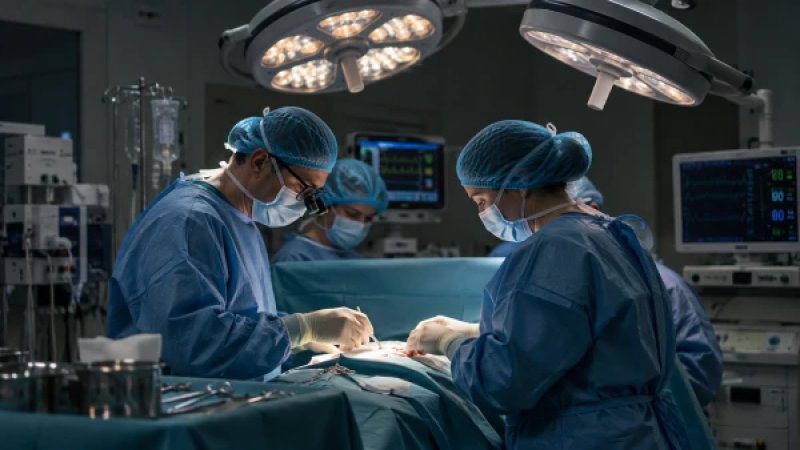
 Foto: BB.LV / операция
The Latvian healthcare system continues to prepare for potential emergencies; however, specialists warn that a serious crisis could simultaneously disrupt the operations of hospitals, pharmacies, transportation, and communication. In such a situation, it is not enough to have reserve supplies of medicines or generators. It is necessary for all institutions to understand who makes decisions, which medical services should be prioritized, and how to act if the usual system ceases to function. As reported by LETA, citing Diena, these issues were discussed by representatives of the Ministry of Health, the Emergency Medical Service, patient organizations, and crisis management specialists. ### The Main Danger — Not Just the Lack of Electricity Modern medicine depends on a whole range of infrastructure systems. For hospitals to operate, uninterrupted power supply, water supply, availability of medicines, and medical equipment are essential. Transportation, fuel, mobile communication, and digital information systems are equally important. If one of these elements fails, the consequences can affect several areas of medical care simultaneously. For example, power outages can disrupt the operation of medical equipment, while transportation issues can complicate the delivery of patients, staff, and necessary materials. Particularly dangerous are situations where multiple failures occur simultaneously. Therefore, experts believe that readiness for a crisis should be assessed not by the presence of individual backup solutions but by the ability of the entire system to continue functioning under changed conditions. ### The First Thing That Needs to Be Done Is to Understand the Scale of the Crisis Dace Roga, Deputy Head of the Human Resources Development Department at the Ministry of Health, believes that at the beginning of a crisis, the primary task is to obtain a complete picture of what is happening. It is necessary to determine which institutions have been affected, which services are under threat, what can still continue to operate, and what resources are lacking. It is especially important to assess the availability of medical personnel. According to Roga, without such information, it is impossible to allocate resources correctly and determine which institutions need help first. However, there is a risk that different hospitals and services will assess the situation solely within their own responsibilities. As a result, management bodies may have an incomplete understanding of the capabilities of the healthcare system as a whole. ### It Is Necessary to Understand How the Situation Will Develop Liene Cipule, Director of the Emergency Medical Service, points out another important aspect. It is not enough to establish how serious the incident is at the moment. It is also necessary to assess how the situation may change in the coming hours and days. For example, it matters how quickly power supply can be restored, whether there are additional threats, and how long medical institutions can operate with limited resources. This will determine whether it is necessary to redistribute patients, recruit additional staff, or seek support from other state services. Cipule emphasizes that such decisions need to be made in the first minutes of the crisis, even if the information remains incomplete. ### Why a Separate Plan May Not Be Enough Latvia has a State Disaster Medicine Plan, and hospitals are developing their own emergency action plans. However, the existence of these documents does not resolve all questions. As noted by Diena, specialists point out the lack of clarity regarding a unified, understandable coordination mechanism for all participants during a complex crisis. This primarily concerns situations where problems simultaneously affect healthcare, energy, transportation, telecommunications, and supply. The absence of coordinated actions can lead to wasted time, misassessment of available resources, and delayed assistance. At the same time, experts emphasize the need to distinguish between a regular incident, a disaster, and a crisis of national scale. This will determine who should lead the actions and what resources need to be mobilized. READ MORE >> [There Is a Plan, but No Confidence: How Latvia Prepares for Crisis Medicine](https://bb.lv/statja/nasha-latvija/2026/04/29/plan-est-uverennosti-net-kak-latviia-gotovitsia-k-krizisnoi-medicine) ### What Will Happen to Doctors and Medical Staff Another potentially weak point in the system remains the availability of staff. In a crisis situation, a hospital needs to know not only how many doctors and nurses are on its staff but also how many will actually be able to reach work, especially if public transport stops running or road traffic is restricted. Another question arises: where should a medical worker operate if their usual healthcare facility cannot continue its activities? According to Dace Roga, during training, medical personnel are prepared for various scenarios, including the possibility of working in a facility closer to their location. However, the effectiveness of such a model will depend on coordination, availability of information, and the willingness of the workers themselves. Liene Cipule reminds us that in the civilian sector, one cannot fully rely on the same mobilization order as in the military. In her opinion, personal preparation, understanding of one’s responsibilities, and the willingness of people to act together play an important role. ### Will Patients Be Able to Receive Medicines The operation of pharmacies and the preservation of medication supplies are of particular importance in crisis situations. Even if the state has reserve supplies, medicines need to be delivered to specific healthcare facilities and patients. Therefore, the readiness of not only hospitals but also pharmacists, wholesalers, and logistics companies is crucial. Kristine Juchkovicha, Executive Director of the Latvian Pharmaceutical Assistance Association, emphasizes the need to include pharmacies and pharmacists in the overall crisis planning system. Patients with chronic diseases, who need to take medications regularly or undergo medical procedures, require special attention. For them, even short-term interruptions in treatment availability can have serious consequences. ### Why Patients Are Recommended to Keep Medical Data on Paper Baiba Ziemele, Chair of the Board of the Patient Organization Network of Latvia, points out the vulnerability of the digital healthcare infrastructure. In the event of a power outage or communication failure, electronic medical records may temporarily become inaccessible. Therefore, people, especially patients with chronic diseases, are advised to carry printed information about their most important medical data. This may include information about diseases, medications taken, dosages, and other circumstances that need to be considered when providing assistance. Such information will allow medical personnel to assess the patient's condition more quickly, even in the absence of access to electronic systems. ### What Has Already Been Done in Latvia The Ministry of Health previously reported on the development of unified methods for assessing hospitals' readiness for various crisis scenarios. Medical institutions assess their own ability to ensure continuity of operations, while the state works on strengthening critical infrastructure and creating reserves of important medications. Among the unresolved issues remains the participation of family doctors in the overall crisis medicine system and ensuring the availability of medicines during large-scale disruptions. Industry representatives emphasize that readiness cannot be ensured solely by purchasing equipment or drafting instructions. Regular drills, checking the interaction between institutions, and preemptively determining which medical services should be provided even under severe resource constraints are necessary. The main question is not whether there are separate emergency plans in Latvia, but whether they can operate in a coordinated manner when several vital systems are under threat.
