

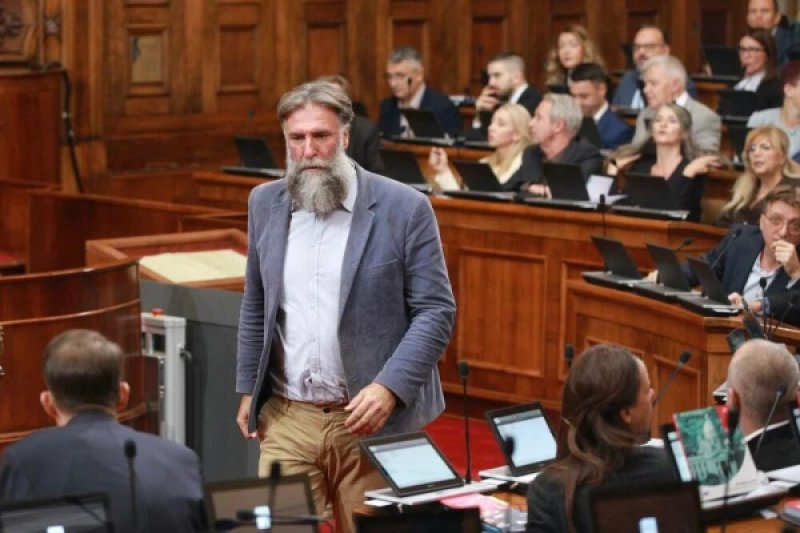
 Foto: BB.LV / Александр Чупич
On November 19, the deputies of the National Assembly of Serbia elected Čupić as the Speaker of Parliament. He received 140 votes from the 239 deputies present. His opponent, representative of the Serbian Progressive Party, Stojan Radenović, received 97 votes. Čupić represents the "Student List" — a political movement that grew out of mass protests against corruption. In the early parliamentary elections on October 25, the movement secured 140 out of 250 seats, ending the 14-year dominance of Aleksandar Vučić's party, [reports](https://abcnews.com/International/wireStory/university-lecturer-serbias-student-led-movement-elected-parliament-138286308?utm_source=chatgpt.com) ABCnews. According to Serbian law, the new Speaker of Parliament simultaneously becomes the acting President. Čupić replaced Ana Brnabić in this position. Presidential elections must be held no later than December 27. ## From University Classroom to Head of State The new leader of the Serbian Parliament was born in 1978. For over 20 years, he has taught at the Faculty of Transport and Traffic Engineering at the University of Belgrade, specializing in transport systems and logistics. However, the university is not the only place of his work. Together with his wife Ana, a doctor by profession, Čupić is raising six children. The family lives about 50 kilometers from Belgrade and engages in organic farming of vegetables and fruits. The lecturer gained widespread recognition during the student protests. When participants of the multi-day marches passed through his locality, he allowed them to stay overnight on his farm, including in the greenhouse. Subsequently, students proposed Čupić to run for parliament and later nominated him for the position of Speaker. ## Protests That Changed Serbia Political changes began after the tragedy in Novi Sad in November 2024, when a concrete canopy at the train station collapsed. Sixteen people died. The disaster sparked mass outrage. Protesters demanded an investigation into the circumstances of the tragedy, accountability for those responsible, and a fight against corruption. Student actions gradually evolved into a nationwide movement that, two years later, won the parliamentary elections. For the first time in modern Serbian history, the protest movement gained enough parliamentary mandates to form a government independently. ## What the New Leader Promised After his election, Čupić stated that he intends to restore the authority of the parliament, ensure respectful relations among deputies, and bring political discussion back to a constructive channel. "I have been given a great honor, along with obligations and responsibilities," he said. The new Speaker promised to act strictly but fairly. Ahead of Serbia are the formation of a government and early presidential elections. Meanwhile, the former ruling party retains significant representation in parliament, so the political struggle is far from over. The story of Aleksandar Čupić has become one of the most unusual episodes in Serbian political changes: a person who not long ago combined teaching with working on a farm has found himself at the pinnacle of state power.
