

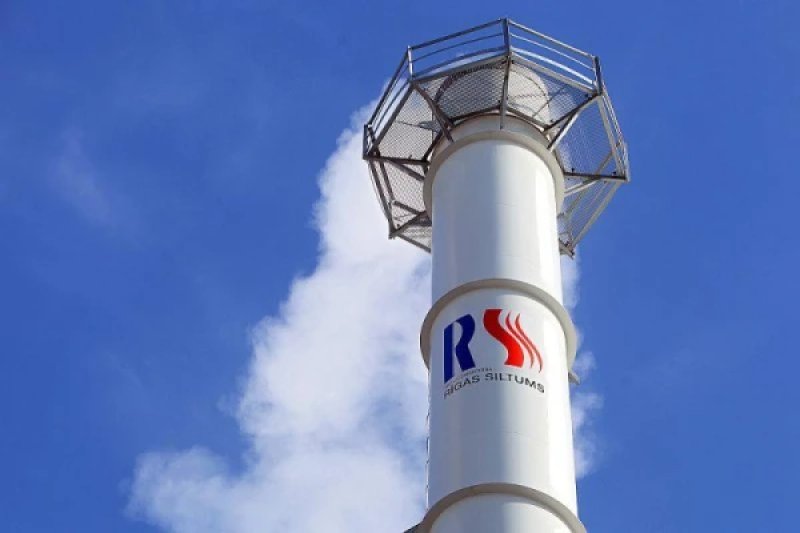
 Foto: BB.LV / Тепло становится дороже
The Public Utilities Commission (PUC) has allowed Rīgas siltums to revise heating tariffs significantly more often than before. Previously, the company could adjust them once every four months, but now this opportunity will arise monthly. The reason is the instability of energy resource prices in global markets. The regulator believes that the new procedure will allow for quicker adjustments to both rising and falling fuel prices. **The tariff can not only increase but also decrease** The PUC explains that more frequent tariff revisions should bring the cost of heating closer to the actual expenses of the company. If natural gas or wood chips become cheaper, the price reduction can be reflected in the tariff more quickly. However, the reverse principle also applies: if costs increase, the price of heating energy can also be revised. The chairwoman of the PUC, Alda Ozola, emphasized that the new mechanism should help avoid situations where accumulated expenses over a long period lead to a sharp jump in tariffs in the next heating season. At the same time, the regulator particularly notes: permission for monthly revisions does not mean that the tariff will actually change every month. It all depends on the actual expenses of the company. **From December 1, Riga residents are already facing an increase** For now, the capital's residents are expecting a very specific increase. From December 1, the Rīgas siltums tariff will increase by 19% — from the current €80.96 to €96.33 per megawatt-hour excluding VAT. Thus, the cost of one megawatt-hour will rise by €15.37. For clarity: if a house consumes 10 megawatt-hours of heating energy per month, then with the previous consumption volume, the expenses for its acquisition will increase by €153.70 excluding VAT. This amount is distributed among the apartments according to the calculation procedure for heating payments. Of course, the actual bills for residents depend not only on the tariff but also on the weather, the thermal insulation of the building, and the volume of energy consumed. **What will allow them to change the tariff?** The regulator has also expanded the list of expenses that Rīgas siltums can take into account when independently revising tariffs. In addition to the cost of natural gas, wood chips, and purchased heating energy, the company will be able to account for changes in the excise tax on fuel and the cost of purchased electricity. Moreover, calculations are allowed to consider certain deviations in fixed costs that occurred in the previous financial year. All changes must comply with the methodology approved by the regulator. **Profits are rising, while heating costs are increasing** Against the backdrop of rising tariffs, the financial results of Rīgas siltums draw attention. According to LETA, in the last financial year, the group's turnover decreased by 3.6% — to €239.625 million. At the same time, profits increased several times and reached €19.888 million. The parent company of Rīgas siltums made a profit of €6.373 million, which is 61.4% more than the previous year. Thus, the company finished the financial year with rising profits, while residents of the capital will have to pay a higher tariff for heating starting in December. However, the profit itself does not indicate how justified a specific tariff is: its calculation is regulated by a separate methodology. **What does this mean for Riga residents?** The main change is that the cost of heating energy can now respond more quickly to the situation in the energy market. This creates the possibility for a more prompt reduction in tariffs when energy resources become cheaper, but it also allows for more frequent increases. Therefore, Riga residents will have to pay closer attention not only to the temperature outside but also to the decisions made by the heat supplier. And the first tangible result is already known: starting December 1, heating energy will increase in price by 19%.
