

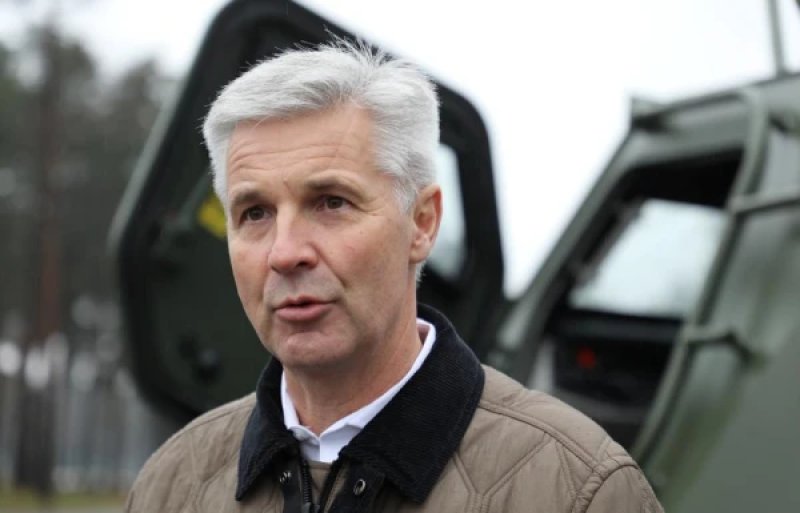
 Foto: BB.LV / Артис Пабрикс
In the LETA podcast "Kas tas vispār bija?!", the director of the Center for Northern European Policy, Artis Pabriks, emphasized that Latgalian identity in itself does not indicate either support for the Kremlin or a desire to change state borders. "We cannot reduce any discontent with the government to irredentism or a desire to create an independent state. If you ask the residents of Riga, they are also dissatisfied with the government," the politician noted. **What if Riga does not hear Latgalia?** According to Pabriks, even individual statements about the possible separation of the region, if the central authority continues to ignore its problems, should not necessarily be perceived as a real political program. He reminded that the residents of Latgalia have historically supported the existence of a unified Latvian state. At the same time, the former minister does not rule out that separatist sentiments may be artificially fueled from outside. **What will happen if "little green men" appear?** Pabriks separately commented on the possibility of the so-called "little green men" appearing in Latvia — armed individuals acting in the interests of a foreign state. In his opinion, such actions should be regarded as aggression, which the National Armed Forces should counter, rather than as an expression of the local residents' right to self-determination. The politician also doubted that joining Latgalia to Russia would help preserve the region's uniqueness. "Would Latgalian identity be respected more, for example, if Latgalia joined Russia? I seriously doubt it," he stated. Thus, Pabriks believes that the dissatisfaction of Latgalia's residents with Riga's decisions should not be confused with separatism, and the potential threat to the region should be assessed primarily in terms of possible external interference.
