

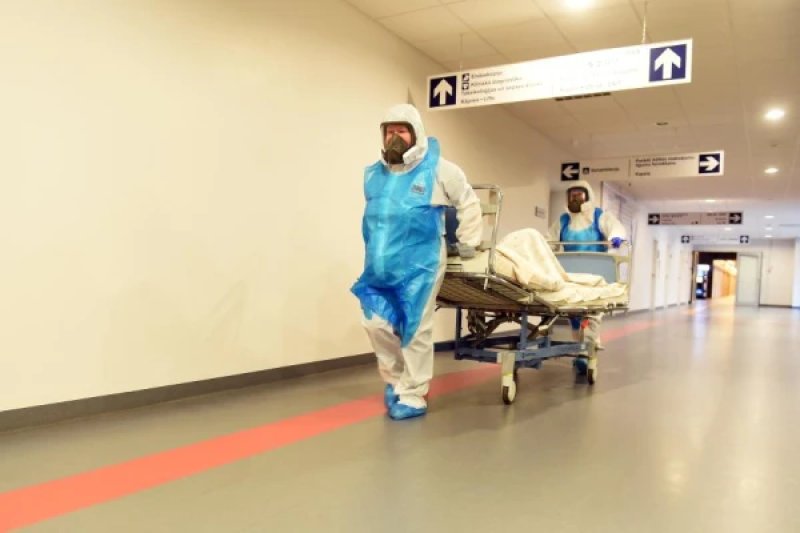
 Foto: BB.LV / санитары везут пациента
The inspection notes that providing information about a patient over the phone is not prohibited. However, establishing the identity of the caller by phone can be more difficult than in a personal visit. Therefore, the hospital must develop a procedure for identifying callers and assessing the possibility of providing the requested information. A hospital employee may ask additional questions to ensure the identity of the caller and their connection to the patient. The personal data of the patient provided by the caller may assist in such verification, but whether this information is sufficient must be assessed in each specific case, DVI emphasizes. At the same time, the procedure for providing information and identifying callers may vary in different hospitals. However, the internal rules of the hospital do not replace the legal grounds for disclosing information. Therefore, even after establishing the identity of the caller, it is necessary to check whether they have the right to receive information about the patient. If it is not possible to establish these circumstances with sufficient certainty during the phone call, the provision of information may be denied. In such a case, one can ask the hospital to explain how to confirm their identity and right to receive information. ## ## How to find out which hospital a person has been taken to? The Emergency Medical Service (NMPD) provides an information phone line at 6733 7750, which operates on weekdays from 8:30 AM to 5:00 PM. According to the established NMPD procedure, information at this number is provided to a person whom the patient has previously designated as a contact person on the E-veselība portal. By calling this number, one can find out whether an ambulance call was made for a specific person, which hospital they were taken to, and on what day this occurred. However, information about the diagnosis or course of treatment is not provided at this phone number. DVI emphasizes that these are the rules of a specific NMPD service, which do not automatically apply to the procedure for providing information in all hospitals. ## ## Who can be designated as a contact person? The State Data Inspectorate urges residents to check the "Contact Persons" (Kontaktpersonas) section in their profile on the E-veselība portal and specify people with whom they should be contacted if necessary. This does not necessarily have to be a relative — a close friend can also be a contact person. At the same time, DVI emphasizes that designating a contact person does not automatically grant them the authority to make all treatment-related decisions on behalf of the patient.
