

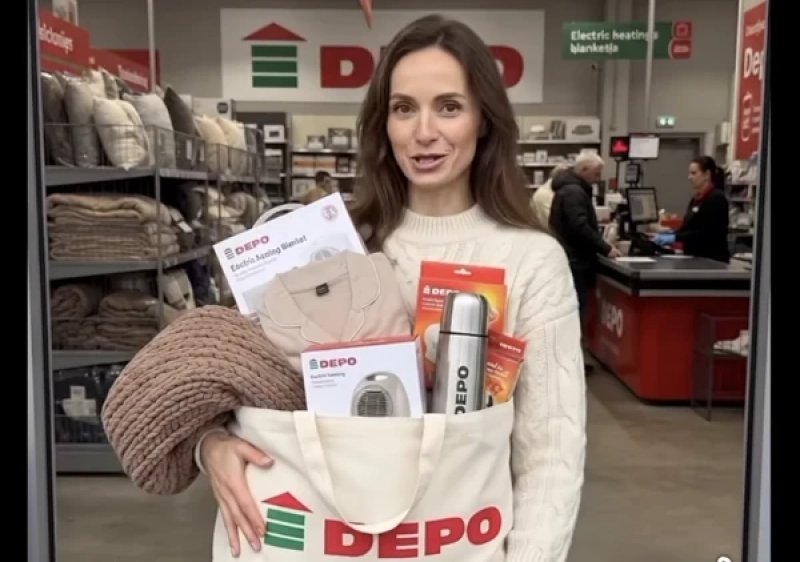
 Foto: BB.LV / рекламный плакат, предлагающий подарки
Latvian blogger Elvis Strazdiņš, known as the "scam hunter," reported on a new fraudulent scheme. In the promotional video, a girl presents the so-called "winter kit" and assures that it can be obtained by Depo customers. The video was created using artificial intelligence. Currently, the fake can be recognized by unnatural movements and other visual errors; however, Elvis advises not to rely solely on this sign: the quality of AI videos is constantly improving, making it increasingly difficult to distinguish a fake from real advertising. In this case, a more reliable hint is the website address to which the advertisement leads. Users are redirected to winterphoto.homes. "This domain does not belong to Depo," explains the blogger. ## ## How the fraudulent scheme works Elvis decided to go through the entire process offered to potential victims. First, on the website, you need to click the "Get Kit" (saņemt komplektu) button, after which you answer several questions about your shopping habits. Then several boxes with gifts appear. The user is asked to choose one of them to supposedly receive a prize. The blogger ironically demonstrates how this stage is arranged: "The first box, of course, is a miss - what a surprise... As usual, in the second one - there is! We received a kit from Depo." After the virtual win, the site asks to fill in personal details and pay for the delivery or receipt of the gift. The amount is small - 2.35 euros. It is at this stage that many may decide they are risking only a negligible amount of money. However, according to Elvis, the real goal of the scammers is not these few euros at all. After entering bank details, they attempt to connect a paid subscription to the card, which can cost much more. ## ## Instead of a gift - regular deductions from the card The blogger confirmed the payment in the banking app, but the transaction did not go through. Soon he received a notification from the bank that the subscription fee could not be deducted from his card. This revealed the true scheme. "It's clear what the trap is! They wanted to set up a subscription on my card, most likely to pull about 50 euros from my account every two weeks, that's the scam - not these 2.30," the expert speculates. Therefore, even small payments on unfamiliar sites can lead to regular losses. If the advertisement promises a gift from a well-known store, check the website address and do not enter bank card details on third-party resources, even if they ask for just a couple of euros to receive the prize.
