

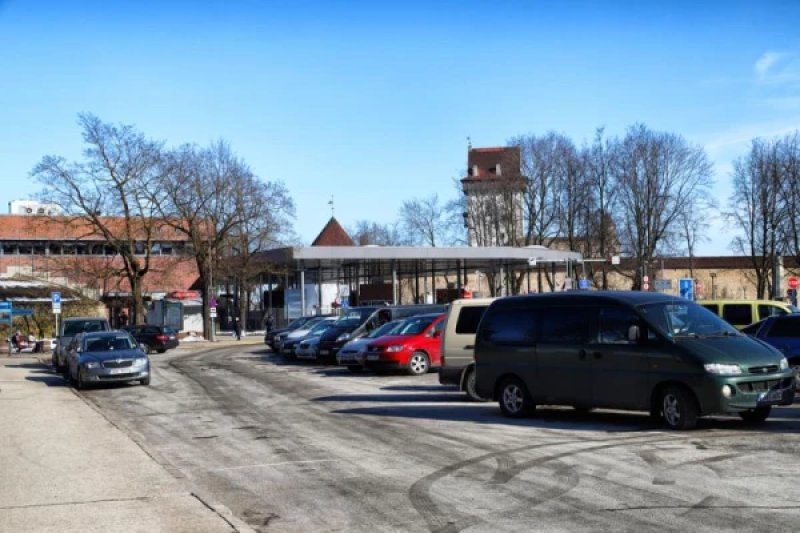
 Foto: BB.LV / Нарва
Estonia is considering further tightening border controls with Russia, including the closure of the last operational railway border crossing in Narva. This was stated by Prime Minister Kristen Michal in an interview with the Estonian Public Broadcasting ERR. According to the head of government, there is currently no final decision regarding railway communication. However, such a measure remains a possible next step if the security situation requires additional restrictions. ### Border Closure May Last for Years On November 20, the Estonian government decided to suspend the movement of vehicles and pedestrians through all border crossings with Russia starting at 7:00 AM on December 1. The restrictions apply to the crossings in Narva, Luhamaa, Koidula, and Saatse. Although legally it is a temporary measure, a specific date for the restoration of communication has not been set. The government intends to assess the security situation in six months and decide whether to maintain the restrictions. Michal acknowledged that he does not expect a significant reduction in the threat from Russia during this period. > "The official name is a temporary border closure, but essentially it is a closure for an indefinite period," the Prime Minister explained. He also expressed confidence that the government would be able to justify its decision in court if it is challenged, for example, by the authorities in Narva. ### Why Did Estonia Take This Step? According to Michal, the decision was a response to ongoing hostile actions by Russia. The Prime Minister claims that there have been 12 incidents in Estonia that the authorities attribute to Russia. Before the complete closure of the border, Tallinn gradually tightened restrictions: reducing the hours of operation of border crossings and implementing full customs control. However, Michal believes that previous measures did not compel Moscow to change its behavior. The immediate reason for the new decision was alleged sabotage against defense industry enterprises. In particular, on November 14, there was an attempted attack on the drone manufacturer Threod Systems in Viimsi. In this case, Estonian law enforcement detained eight Latvian citizens. Earlier, in August, there was an attack on a building used by Milrem Robotics, a manufacturer of military equipment supplied, among others, to Ukraine. Estonian special services link the organization of this arson to Russia. ### What Will Happen to Railway Communication? At the moment, Estonia's decision does not extend to railway freight transport. The only operational railway border crossing between Estonia and Russia remains Narva. The Koidula railway crossing ceased operations in July after the corresponding point on the Russian side was closed. Michal did not rule out that the crossing in Narva could also be closed in the future. At the same time, the Prime Minister emphasized that further actions do not necessarily have to be limited to border measures. Estonia also advocates for increased pressure on Russia at the European Union level, including asset freezes, monitoring of the so-called shadow fleet, and visa restrictions for Russian military personnel. ### The Consequences Will Be Felt by Border Regions Estonian authorities acknowledge that the border closure will create difficulties for residents of border areas. The changes may particularly affect Narva, where many residents have family and other ties to Russia. The government is preparing support measures for regions whose economies depend on cross-border movement. Preliminary estimates suggest that the revenue losses for the municipalities of Narva and Setomaa could amount to about 500,000–600,000 euros annually. However, Michal believes that the restriction on crossing the border will primarily harm Russia. ### What Does This Mean for Latvia? The closure of Estonian road crossings may change travel routes between Russia and European Union countries. Some passengers and carriers who previously used Estonia may attempt to cross the border through Latvia. Latvian Prime Minister Andris Kulbergs has already instructed agencies to assess the possible consequences and prepare proposals for further actions. At the same time, Kulbergs himself called the unilateral closure of the Estonian border a mistake, emphasizing that such decisions should ideally be coordinated among all Baltic countries. READ MORE >> [The government may decide on retaliatory measures in response to the closure of Estonia's border points](https://bb.lv/statja/politika/2026/11/23/pravitelstvo-mozet-priniat-resenie-ob-otvetnyx-merax-na-zakrytie-pogranicnyx-punktov-estonii) So far, Latvia has not announced a similar complete closure of its border crossings. Thus, starting December 1, road and pedestrian communication between Estonia and Russia will cease through border points, but railway freight transport will continue. The possibility of further restrictions remains open.
