

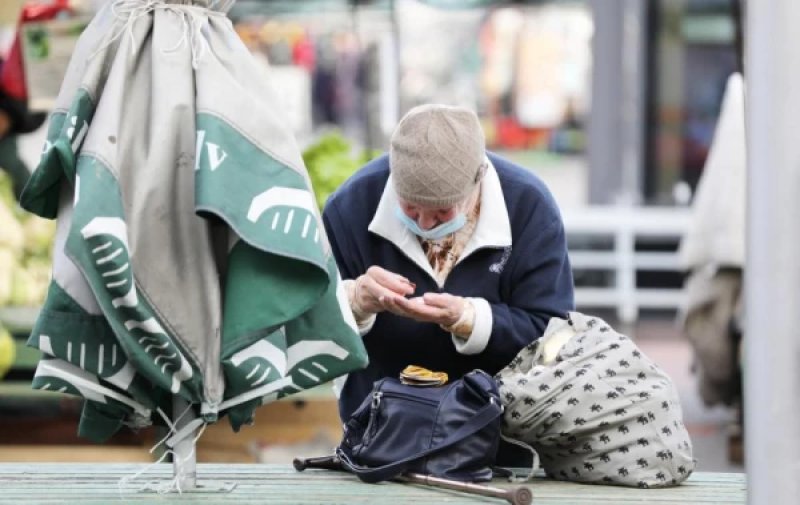
 Foto: BB.LV / Пенсионер считает деньги
This is evidenced by preliminary data from the Central Statistical Bureau (CSB), published on November 25, reports bb.lv. ### The largest increase in spending was on poverty reduction The most significant percentage increase in spending was recorded in the area of reducing social isolation. In 2025, 84.6 million euros were allocated for these purposes — 11.4% more than the previous year. The main reason was the increase in spending on the Guaranteed Minimum Income (GMI) benefit. In 2025, the government raised the GMI threshold for the first or only household member from 137 to 166 euros, and for other family members — from 96 to 116 euros. As a result, spending on this benefit increased by 16.3%, reaching 13.8 million euros. At the same time, the number of benefit recipients decreased. According to the Ministry of Welfare, over the year, there were 5.4% fewer recipients — in 2025, 22,200 people received GMI. Thus, the government began to spend more on benefit payments despite the decrease in the number of recipients. ### Almost half of social spending goes to pensioners The largest portion of social protection spending — 45.7% — was allocated to residents of retirement age. In total, 3.761 billion euros were directed towards pensions, benefits, and social care for the elderly in 2025. This is 11.1% more than in 2024. Of this amount, 89.4%, or about 3.4 billion euros, was spent directly on old-age pensions. The increase in spending is mainly related to the pension indexation carried out in 2025, as well as the increase in their minimum amounts. On average, the monthly old-age pension increased by 65 euros compared to 2024, reaching 616 euros. Total spending on old-age pensions grew by 11%. Due to indexation and the increase in minimum pensions, spending on survivor's pensions also rose — by 8%. Overall, spending on social protection in the case of loss of the breadwinner increased by 8.1%. ### 790 million euros allocated to support people with disabilities Funding for assistance to people with disabilities significantly increased. In 2025, spending on this category of social protection rose by 9.7%, reaching 790.1 million euros. Particularly noticeable was the increase in costs for assistant and companion services. After the wage increase for such workers, spending on providing assistant services to people with disabilities through municipalities increased by 19.5%. In total, 73.5 million euros were allocated for these services. ### Hospital costs became more expensive for the state In 2025, total healthcare spending within social protection increased by 3.4%. At the same time, spending on sickness benefits rose by 4.5%, reaching 390.9 million euros. The main reason is the increase in the average amount of the benefit paid. If in 2024 the average amount of the sickness benefit was 871.67 euros, in 2025 it increased to 945.70 euros. Thus, the average benefit amount increased by more than 74 euros. ### Working parents received more Spending on parental benefits also increased. This is related to the change in the payment procedure that came into effect on January 1, 2025. Previously, a parent who continued to work or engage in self-employment while not on parental leave received 50% of the assigned parental benefit. Starting from 2025, this payment was increased to 75%. The change in payment conditions became one of the reasons for the increase in government spending to support parents. ### Fewer unemployed individuals receiving benefits Spending on unemployment benefits in 2025 increased by 2.1% compared to the previous year. This is primarily due to the increase in the average salary, from which social insurance contributions are made and on the basis of which benefits are calculated. At the same time, the number of unemployment benefit recipients decreased. According to the State Social Insurance Agency (SSIA), at the end of 2025, 28,200 unemployed individuals were receiving such benefits. This is 9.1% less than at the end of 2024. ### Less spent on housing benefits Unlike most other areas of social protection, spending on assistance to residents for housing payments decreased. Total spending on housing-related support decreased by 5%, amounting to 42.7 million euros. Directly on housing benefits, 41.1 million euros were spent in 2025 — 4.9% less than in 2024. The reduction in spending is related to the decrease in the volume of housing benefits paid by municipalities. According to the Ministry of Welfare, over the year, the number of housing benefit recipients decreased by 7,600 individuals. If previously 67,800 residents received such assistance, in 2025, it was 60,200. ### Nearly one-fifth of the economy goes to social protection Total spending in Latvia on social protection, including administrative and other costs, amounted to 18.9% of the Gross Domestic Product (GDP) in 2025. This is 0.3 percentage points more than in 2024. If only pension and social benefit expenditures are considered, the figure is 18.6% of GDP. A year earlier, it was at 18.4%. For comparison, in 2010, Latvia spent 18% of GDP on pensions and benefits. Thus, over 15 years, the share of these expenditures increased by only 0.6 percentage points. At the same time, the average figure for the European Union in 2025 was 27.5% of GDP. ### How Latvia compares to Lithuania and Estonia In terms of the share of spending on pensions and benefits in GDP, Latvia surpassed both neighboring Baltic countries in 2025. | Country | 2024 | 2025 | |---|---:|---:| | Latvia | 18.4% | 18.6% | | Lithuania | 17.4% | 18.2% | | Estonia | 17.8% | 17.8% | In Lithuania, spending on pensions and benefits increased by 0.8 percentage points over the year — significantly faster than in Latvia. In Estonia, their share of GDP remained unchanged. However, comparing spending per capita shows a very different picture. ### Latvia spends a thousand euros less per capita than its neighbors In 2025, spending on pensions and social benefits per capita in Latvia amounted to 4,400 euros per year. In Lithuania and Estonia, this figure reached 5,400 euros. Thus, the difference is 1,000 euros per person per year, or about 83 euros per month. At the same time, in all three countries, spending per capita increased compared to 2024. In Latvia, the growth was 8.3%, in Lithuania — 11.5%, and in Estonia — 5.3%. This means that despite a higher share of social spending in GDP, Latvia continues to lag behind its neighbors in absolute spending per capita. This is also due to differences in the sizes of economies and income levels, so the spending relative to GDP alone does not allow for a judgment on how generous the social protection system is. ### Spending is increasing, but the gap with neighbors remains Preliminary data from the CSB shows that in 2025, social spending in Latvia increased in almost all major areas. The largest amounts continue to be directed towards pension provision, while the fastest percentage growth is observed in support for socially vulnerable groups. At the same time, the number of recipients of certain benefits, including assistance for low-income individuals, the unemployed, and residents struggling with housing payments, is decreasing. Despite the increase in total spending to 8.231 billion euros, Latvia still spends less on pensions and benefits per capita than Lithuania and Estonia.
