

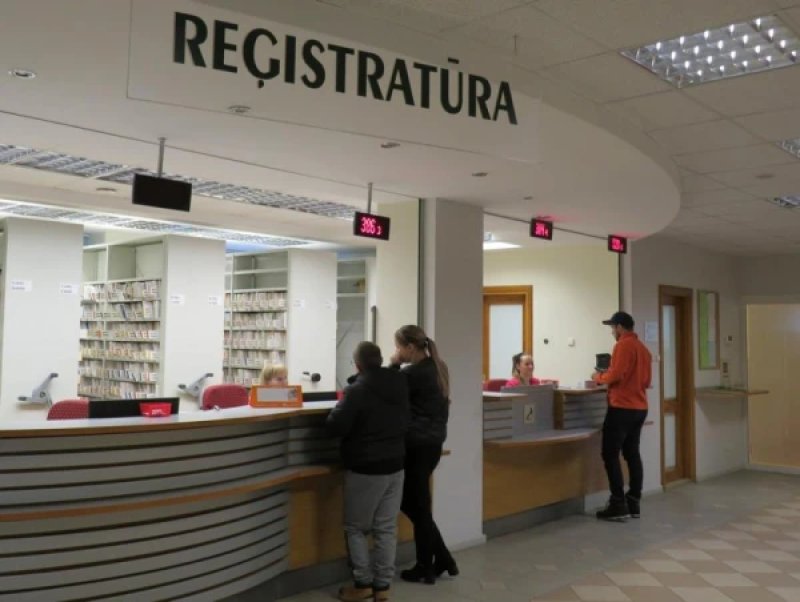
 Foto: BB.LV / Регистратура поликлиники
Latvian patients will have the opportunity to make appointments with a doctor by phone even at night and on weekends. Instead of a receptionist, they will talk to artificial intelligence, including in Russian. Anyone who has ever tried to call the reception of a large hospital or clinic is familiar with this problem: the phone is either busy or you have to listen to music for a long time while waiting for an answer. The Latvian company Instadial has developed a program capable of simultaneously handling up to one hundred phone calls with patients. Moreover, this is not the usual phone answering machine that asks you to press a certain button. You can talk to the artificial intelligence just like you would with a regular receptionist: explain which doctor you want to see, find out when they are available, and choose a convenient time for your visit. The artificial intelligence will automatically schedule the appointment in the doctor's calendar. Similarly, you will be able to reschedule your visit to another day or even cancel it altogether. The program also allows sending the patient information received during the phone call via email or SMS. The artificial intelligence will be able to communicate with patients in three languages - Latvian, Russian, and English. According to data from the Latvian Investment and Development Agency, by July of this year, the new technology had been tested in more than ten Latvian clinics. Now, its developers have signed a cooperation agreement with the creators of the largest medical information system in Latvia, Ārsta Birojs, which is used by most regional and university hospitals in the country, as well as many medical centers and practices. This system is also responsible for scheduling patient appointments with doctors. However, no one plans to completely hand over the reception to artificial intelligence just yet. Each medical institution will determine for itself which questions the program can handle independently and in which cases it will need to transfer the patient's inquiry to a staff member. When exactly this service will be available in a particular hospital or clinic is still unknown: the decision to implement it will be made by the medical institutions themselves.
