

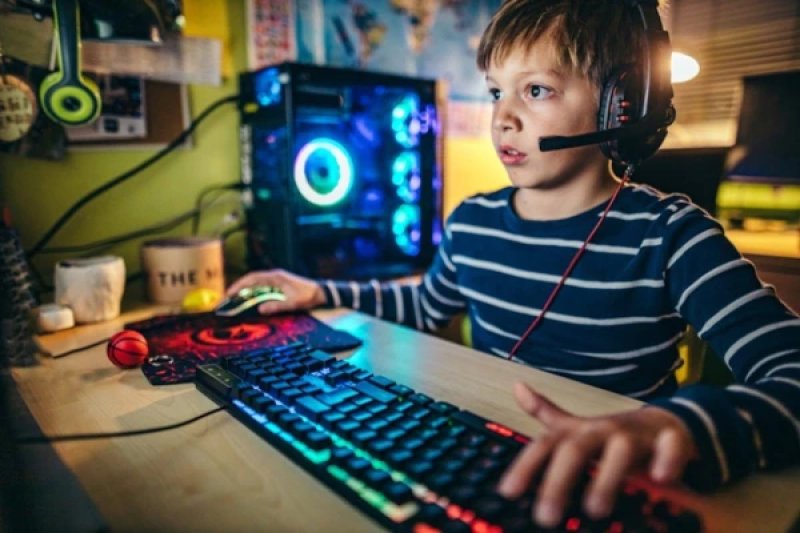
 Foto: BB.LV / Ребенок играет
As noted by Good Housekeeping, instead of constant debates about screen time, parents should pay closer attention to what exactly their child is playing and what skills they are acquiring. ### 1. Games Can Train Memory and Attention The common belief that video games harm thinking does not fully align with the results of scientific research. In a large American study, ABCD, which involved about 12,000 children, scientists found an interesting pattern: children who regularly played video games performed better on some memory tasks and impulse control tests than their peers who did not play. Researcher Bader Chaarani from the University of Vermont noted that young gamers demonstrated higher speed and accuracy in completing certain cognitive tests. This is not surprising: many modern games require players to keep track of multiple objects simultaneously, make quick decisions, remember information, and plan further actions. However, scientists warn that the discovered connection does not necessarily mean that video games made children smarter. Other factors may have influenced the results. Additionally, prolonged screen time is associated with certain risks. The study noted that children who played three hours a day or more experienced more difficulties, including attention-related issues and symptoms of depression. However, a causal relationship has not been proven. ### 2. Video Games Help with Communication and Making Friends Parents often worry that computer games turn children into loners. But the modern gaming world has long ceased to be limited to one person in front of a monitor. For example, in Minecraft, children can build virtual cities together, assign responsibilities, discuss plans, and solve emerging problems. Team games teach negotiation, coordination of actions, and consideration of the interests of other participants. Competitive games provide an opportunity to learn how to accept defeat gracefully, respect opponents, and celebrate shared achievements. Moreover, friendships do not necessarily end after turning off the computer. The next day, schoolchildren discuss completed levels, share impressions, and tell each other about their discoveries. Thus, games can become an additional space for communication. Of course, virtual contacts should not completely replace meetings with friends, walks, and other activities outside the internet. ### 3. Games Help Relax After a Tough Day Children, like adults, need time for rest and emotional unloading. Some prefer reading, others listen to music, while some choose calm computer games. For some children, the virtual world becomes an opportunity to briefly distract from school worries, shift focus, and restore emotional balance. This is especially true for games where players can leisurely build, explore the surrounding world, grow plants, or complete small tasks. However, it is important to maintain a boundary between relaxation and an attempt to escape from real problems. If a child plays and calmly returns to everyday tasks, there may be no cause for concern. On the other hand, if the computer becomes the only way to cope with anxiety, loneliness, or conflicts, adults should find out what is troubling the child rather than simply banning them from playing. ### 4. Video Games Do Not Necessarily Make Children Aggressive One of the main parental concerns is related to violence in computer games. However, it cannot be claimed that any child playing such games will necessarily become aggressive. Behavior depends on many circumstances: age, personality, family environment, emotional state, and the content of the game itself. At the same time, certain game plots may not be suitable for some children, especially those struggling with self-control. Therefore, it is important for parents to pay attention not only to age ratings but also to the child's reactions. Does the child become irritable after playing? Can they calmly end a gaming session? Do they bring gaming conflicts into everyday life? Safety in multiplayer games deserves special attention. Children may encounter insults, bullying, threats, and unwanted messages from strangers. Therefore, it is important to explain to the child how to block unpleasant users, protect personal data, and seek help from adults. ### 5. Games Can Become a Shared Family Hobby Instead of viewing video games solely as a competitor to family communication, parents can try to turn them into a joint activity. It is not necessary to become an experienced gamer. It is enough to show interest: ask the child what they are playing, why they like that game, and what tasks they are trying to solve. You can suggest playing through a level together, building a virtual house, or organizing a small family competition. This way, adults can better understand the child's interests, and the child will feel that their hobbies are valued. Playing together also creates an opportunity to casually discuss communication rules, online safety, and reasonable time management. ### How to Make Video Games Safer Experts recommend adhering to several simple principles: - Ensure that games do not interfere with adequate sleep, studying, physical activity, and communication. - Choose games based on the child's age and content. - Inquire about who the child is communicating with online. - Explain why it is not safe to share addresses, passwords, and other personal information with strangers. - Use privacy settings and parental controls. - Monitor in-game purchases, as even free games may require money for additional features. The key is not the number of prohibitions but a reasonable balance. Video games are neither a miraculous means of developing intelligence nor an inevitable threat to children's mental health. Their impact depends on what games the child chooses, how much time they dedicate to them, and what role they play in their everyday life. Therefore, sometimes it is more beneficial not to take away the child's console or phone but to sit down next to them and ask to show what captivates them so much.
