

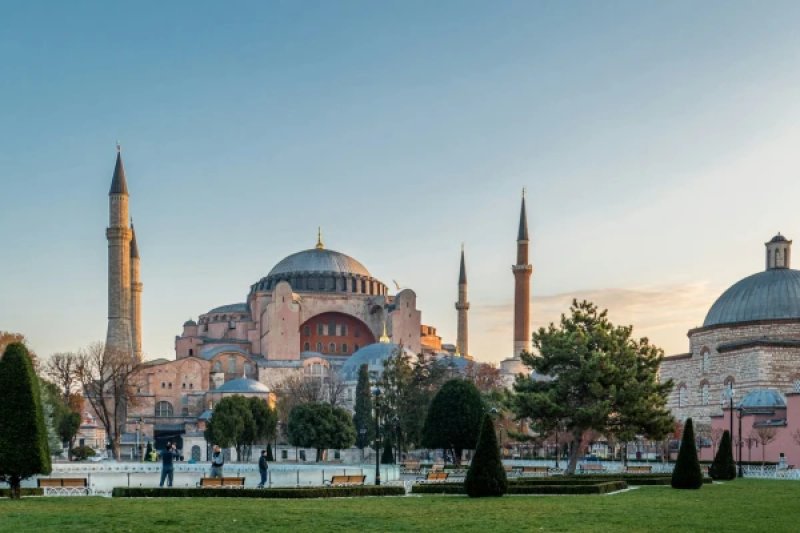
 Foto: BB.LV / Тайны древнего Константинополя: под Айя-Софией обнаружили сеть подземных тоннелей
## Traces of Disappeared Structures One of the most significant discoveries was made by specialists in an ancient underground burial chamber. Excavations at a depth of one and a half meters below the previously known floor level revealed the remains of earlier structures. The current building of Hagia Sophia was constructed between 532 and 537 during the reign of Byzantine Emperor Justinian on the site of more ancient Christian temples. It is possible that the discovered architectural elements date back to the period of their existence. However, the exact age of the findings is yet to be determined. ## Mysterious Tunnels and Ancient Aqueducts Seven of the nine discovered tunnels have already been completely cleared. The length of the longest of the cleared sections is 180 meters. Archaeologists are investigating whether it could be connected to the ancient Roman road of Constantinople. According to researchers, part of the underground network was used for water supply and drainage of rainwater. In fact, water still flows through some of the channels. One of the passages leads towards the famous Basilica Cistern — a huge underground reservoir from the Byzantine era. Whether there is a direct connection between the structures remains unknown. ## The Underground May Open for Tourists Simultaneously with the excavations, specialists are restoring damaged vaults, reinforcing the masonry, and installing additional metal structures. Turkish authorities are considering the possibility of creating a new tour route through the undergrounds of Hagia Sophia. Additionally, engineers are exploring the prospects of using the ancient galleries to improve the ventilation of the historic building. When exactly tourists will be able to descend beneath one of the most famous architectural monuments in the world is not yet reported. The main conditions remain the preservation of ancient structures and the safety of visitors. Hagia Sophia, with a history spanning nearly one and a half millennia, continues to present researchers with discoveries that allow for a new perspective on the structure of ancient Constantinople.
